About Nightrun
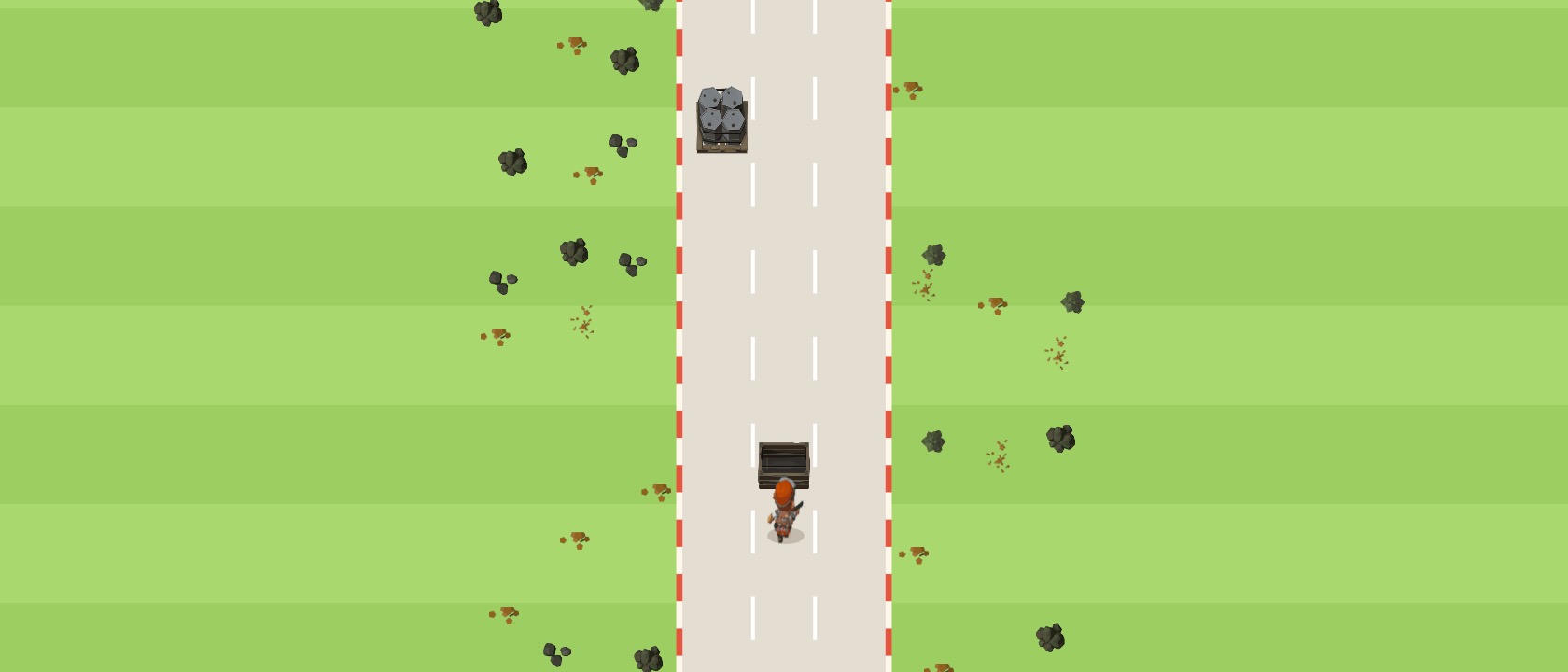
An endless runner with one move: step one lane left or one lane right. Crates block a single lane, barriers block two and leave one gap, and imps crouch in one lane before leaping into the next — where an imp is is not where it will be. Coins sit right behind the crates and in the lane an imp is leaving, and swerving out of a lane at the last instant pays a close-call bonus, so the safe lane is never the lane that scores. The road gets faster and the hazards get closer the whole way. Runs are short, and losing one is the normal outcome.
How to play
- Tap the left or right half of the screen, or press the arrow keys or A and D, to step one lane. Two quick taps cross two lanes.
- Crates block one lane. Barriers block two and leave a gap at one edge. Gates put crates on both edges, leaving only the middle open.
- Imps crouch in a lane, facing the lane they are about to jump into, then leap across.
- Score 1 point for each stretch of road, 5 for a coin and 10 for a close call.
- Hit anything and the run ends. The road gets faster and the rows get closer the whole way.
Tips
- Read which way the imp faces. An imp faces the lane it is about to jump into. The lane it leaves becomes the safe one, and its coin is waiting there, level with where it crouched.
- Cut back in behind crates. Most crates have two coins lined up just past them in the same lane. Dodge out, then step straight back in as the crate passes to collect both.
- Leave it late on purpose. Stepping out of a lane less than 0.3 seconds before something would hit you pays 10 points, double a coin. It is only paid once you are actually clear.
- Barrier gaps are at the edges. A barrier always leaves its gap in the left or right lane. From the middle lane that is one step; from the wrong edge it is two, so move early.
- Know when each hazard starts. The first 6 seconds are crates only. Barriers join after that, and imps and gates start appearing from 14 seconds.
Read the full Nightrun guide (5 min read)
From the developer
Nightrun is an endless top-down runner with one verb: step one lane left or right. I built it on a small shared runtime I wrote for my one-verb games, which handles loading, screen fitting, input, sound and saving, in plain JavaScript on a 2D canvas.
The design point is that the safe lane never scores. Coins sit right behind crates and in the lane an imp is about to leave, and leaving a lane less than 0.3 seconds before something in it would have hit you pays a close-call bonus. There are three hazards, each beaten differently: a crate blocks one lane, a barrier blocks two and leaves a gap at an edge, and an imp crouches, turns and leaps across.
Fairness is a rule in the code: a row is rejected unless it can be reached from every lane that was safe for the row before, with lane changes budgeted 40% slower than the runner really moves. A test bot that only does what that rule promises survives three minutes on 120 seeds. The art is reused from Run and Gun: the KayKit Adventurers runner by Kay Lousberg, a Meshtint Studio imp, and Synty POLYGON crates and barricades.
Son Hoang, who made Nightrun

Update history
- Added looping percussion music from Vasco Grossmann's Fantasy Music Lite.
- The score readout now sits in the centre of the top bar.
- The runner now faces up the road instead of running side-on.
- First release: a three-lane runner where you tap the left or right half of the screen to change lane.
Questions
Does Nightrun save my progress?
It keeps your best score in this browser's local storage and shows it on the pause sheet and at the end of each run. Nothing else is saved: every run starts in the middle lane facing a single crate.
Can I play Nightrun on a phone?
Yes. Tap the left half of the screen to move one lane left and the right half to move right. Upright or sideways, every screen shows the same length of road ahead, so you get the same warning.
Can a run be impossible?
Each new row is checked against the one before: from every lane that was safe, a safe lane must be reachable in time, allowing lane moves 40% slower than the runner makes them. If a row fails, it is rolled again.
Is there an ending?
No. The road speeds up every second until it reaches its top speed, and rows keep closing up until a new one arrives about every third of a second. The run ends when you hit something.